The 3 A.M. Ceiling
I’m not your doctor, and this isn’t medical advice. Sleep problems can be a symptom of something that needs a real diagnosis — sleep apnea, thyroid trouble, a medication interaction, depression. If your sleep has changed sharply, or you’re falling asleep during the day against your will, that’s a conversation with your physician, not an article.
Here’s the scene, and I’d bet money you know it.
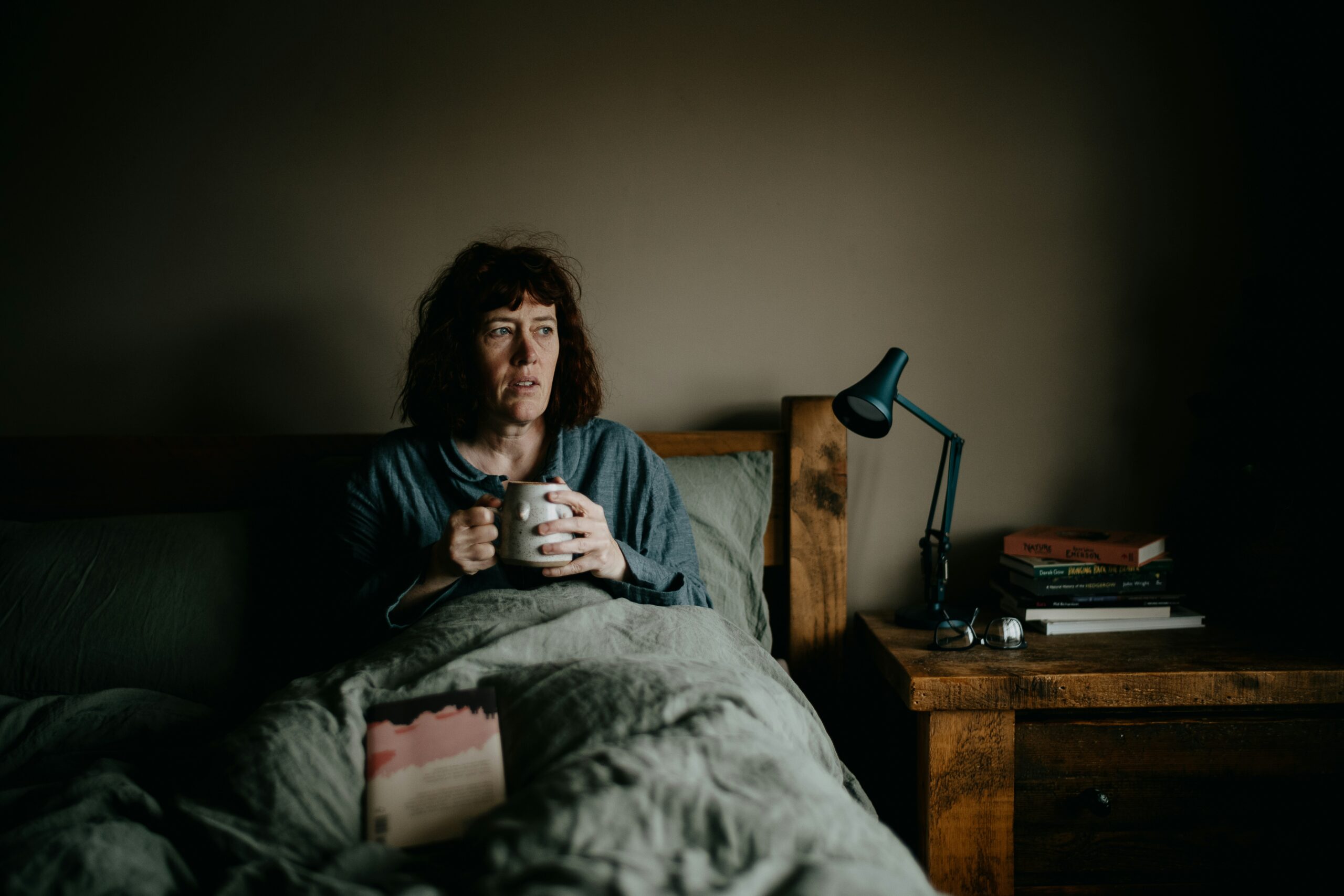
It’s 3:10 in the morning. You’ve been asleep since eleven, which is respectable. Now you’re awake — completely, irritatingly awake — staring at a ceiling you can’t actually see. The house is doing that thing where the refrigerator sounds like a diesel engine. And somewhere around 3:40, the second wave arrives: not just I’m awake, but something is wrong with me.
That second part is the one I want to take away from you tonight.
Because most of what people over sixty believe about their own sleep is a mix of half-truths and outright bad information, and the bad information does more damage than the wakefulness ever did. You lie there doing arithmetic — if I fall asleep right now I can still get four hours — and the arithmetic is what keeps you up. Nobody ever calculated their way back to sleep.
What actually changes, and what doesn’t
Two facts sit next to each other and people only ever hear one of them.
Fact one: how you sleep changes with age. Sleep gets lighter. The deep, heavy stage that dominates a twenty-year-old’s night gets thinner. You wake more often, and you wake more completely — a noise that a younger person would sleep through will surface you all the way. Your internal clock also tends to drift earlier, which is why you’re nodding off during the evening news and wide awake before the paper lands.
Fact two: how much you need does not collapse. The CDC still puts adults 61 to 64 at seven to nine hours, and adults 65 and up at seven to eight. That’s barely a nudge from what you needed at forty.
Put those two together and you get the real problem, which almost nobody names: the need stayed, the machinery got noisier. You are not a person who suddenly requires less sleep. You are a person who now has to work a little harder for the same amount. Those are wildly different situations, and the second one has solutions.
And the “I only need five hours” crowd? Some of them are genuine short sleepers. Most of them are sleep-deprived people who have simply gotten used to it — which is a different thing entirely, the way somebody who’s been cold for three hours stops noticing.
The need stayed. The machinery got noisier.
The four thieves
When sleep goes sideways after 55, it’s usually not mysterious. It’s one of four things, and they’re worth ruling out in order.
The bladder. The single most common reason older adults wake at night, and the most fixable. Most of the fix is timing, not volume — the fluid you drink before bed is the fluid that wakes you at two.
Breathing. Sleep apnea is dramatically under-diagnosed in this age group, especially in women, where it often shows up as fatigue and fog rather than the cartoon snoring everybody expects. If your partner has ever said you stop breathing, or you wake with a headache, or you’re exhausted after eight hours in bed — get tested. This is the one on the list that has cardiac consequences, and I’d move it to the front of the line.
The medicine cabinet. A surprising number of common prescriptions interfere with sleep, and a surprising number of people never connect the two because the prescription came first and the insomnia came later. Bring the actual bottles to your doctor — all of them, including the supplements — and ask the direct question: is anything here keeping me up, and can we move the timing?
Pain. Arthritic joints don’t hurt more at night. They hurt the same and you have nothing else to think about.
Why the sleeping pill is the wrong first move
This is where I’ll be blunt, because the standard advice and the standard practice have drifted apart.
The American College of Physicians recommends cognitive behavioral therapy for insomnia — CBT-I — as the first-line treatment for chronic insomnia in adults. Not as the thing you try after the pills fail. First. Their reasoning is plain: it works, it keeps working after you stop, and it carries fewer harms than the medications.
And about those medications: the FDA approved most sleep drugs for short-term use, on the order of four to five weeks. Read that again if you’ve been taking one for four years. That isn’t a scolding — it’s an enormous number of people, and nobody told them either. It’s a reason to have a conversation about a plan, not a reason to stop anything tonight on your own. You do not abruptly quit a sleep medication you’ve been on for years. You taper, with a doctor.
CBT-I sounds like therapy and isn’t, really. It’s closer to physical therapy for a sleep schedule. It’s typically six to eight sessions, much of it counterintuitive — the core move is often to restrict your time in bed, not extend it, because lying awake for three hours teaches your brain that bed is where you lie awake. There are trained providers, and there are well-validated app-based programs for people who don’t have one nearby. Ask your doctor for a referral by name: cognitive behavioral therapy for insomnia. Use the whole phrase. It gets better results than “I’m not sleeping.”
The unglamorous list that actually works
The CDC’s own sleep hygiene guidance is short and nobody follows it, so here it is with the reasons attached:
- Same bedtime, same wake time — including weekends. The wake time matters more than the bedtime. Anchor that end and the other end sorts itself out.
- Cool, dark, quiet. A bedroom that’s too warm is the most common environmental sleep thief in American houses.
- Screens off at least thirty minutes before bed. It’s not only the light. It’s that the phone is an anxiety delivery device and you’re checking the news at 10:45.
- No large meals or alcohol close to bedtime. Alcohol is the great impostor here. It puts you down fast and then fragments the back half of your night — which is precisely why you’re up at three.
- Caffeine out after midday. It has a longer half-life than you think, and that half-life gets longer with age.
- Move during the day. Daylight and exertion are the two strongest signals your body clock has.
One more that isn’t on the CDC’s list and belongs there: get out of bed. If you’ve been awake twenty minutes and you’re starting to negotiate with the ceiling, get up. Low light, dull book, no screens. Go back when you’re sleepy rather than when you’re frustrated. Staying in bed to try harder is the single most counterproductive thing a person can do at 3 a.m., and it’s what nearly everyone does.
The reframe I’d offer you
There’s a version of the 3 a.m. wake-up where you lie there taking inventory of every mistake you’ve made since 1987. That’s not insomnia. That’s grief, or worry, or an unfinished conversation, and it found the only quiet hour in your day.
That one doesn’t get solved with a darker room. It gets solved in daylight, out loud, with somebody.
But the plain mechanical version — the one where you just surfaced and the house is loud — deserves less fear than you’re giving it. You woke up. That’s what older sleep does. Your job is not to panic about it, and not to lie there doing math.
Get up. Read something boring. Go back.
Go be bold!
Tonight, pick one thing off that list — one — and hold it for two weeks. Same wake time is the one I’d choose. Then reply and tell me whether 3 a.m. got quieter.
Sources
- CDC, About Sleep — recommended hours by age, and the sleep hygiene list
- American College of Physicians, CBT-I as initial treatment for chronic insomnia
- National Institute on Aging, A Good Night’s Sleep