What Happens to Friendships After Retirement
I’m not a therapist or a doctor, and this is general information. If loneliness has become heavy, or it’s been weeks since you’ve wanted to see anyone, tell your doctor. It’s a health question, and it’s treated like one.
There’s a retirement party. A sheet cake, a card everybody signed, a speech that runs a little long. Somebody says, “Don’t be a stranger.” You mean it when you say you won’t.
Six months later, the phone is quieter than you expected.
Nobody did anything wrong. Nobody stopped caring. The thing that held a lot of those friendships together was the building, the schedule, and the coffee pot. When that went away, some of the friendships went with it.
If that’s happened to you, you’re not unusual, and you’re not doing retirement wrong. But it’s worth understanding exactly what changed, because the fix is different from what most people try.
What you actually lose
Researchers in Finland followed retiring public-sector workers from about six months before retirement to about a year and a half after. They sorted each person’s relationships into an inner circle, a middle circle and an outer circle.
The finding was smaller and more specific than the headlines you’ve seen. On average, people lost about one relationship during the move into retirement, and the loss came almost entirely from the outer circle. The inner circle, the people closest to them, held steady overall. After the transition, nothing more fell away.
Here’s the honest limit. That’s one study, in one country, of mostly women in public-sector jobs, followed for a short time. It didn’t record who the lost ties were. The researchers’ own reading is that the ones that faded were likely work ties, which makes sense, but they didn’t measure it directly.
So the picture is this: you probably don’t lose your people. You lose the in-between people, the ones you saw every day without ever making a plan. And those turn out to matter more than anyone admits.
The good news nobody mentions
A large European study published in 2024 used data from the Survey of Health, Ageing and Retirement in Europe to ask whether retirement itself makes people lonelier.
In the short run, they found no clear effect. In the long run, four to six years out, retirement reduced loneliness. The likely reason: retirees took up more personal and group activities, and those built larger social networks.
There’s a catch inside that good news. Women who retired while their partners were still working felt lonelier for a while, mostly from missing companionship, and that often eased once the partner retired too. And people with more education were more likely to see the improvement.
Read that carefully, because it’s the whole argument of this piece. Retirement didn’t make people less lonely by itself. What they did with it did.
Why work friendships fade so fast
Jeffrey Hall, a communication researcher at the University of Kansas, tried to measure how long it takes to turn an acquaintance into a friend. His estimate: about 50 hours together for a casual friend, about 90 for a friend, and more than 200 for a close friend.
Then the part that explains the retirement party. Hours spent working together didn’t count as much. Hanging out, joking around, doing things for fun built friendship. Sitting in the same meeting mostly didn’t.
That means some of the people you thought of as friends were friends of the place. The friendship never had a life outside the building, so when the building went away, there was nothing left to hold it up. That isn’t a failure. It’s just what it was.
It also means the opposite is true. A friendship that survives retirement is one you’ve already proven is real. Those are worth protecting.
Why it matters more than it feels like
In 2023 the U.S. Surgeon General issued an advisory on loneliness and isolation. It reported that social isolation is linked to a 29 percent higher risk of early death, and loneliness to a 26 percent higher risk, and that lacking social connection can raise that risk about as much as smoking up to 15 cigarettes a day. It also cited a roughly 50 percent higher risk of dementia in older adults with chronic loneliness or isolation.
The limit: those figures come largely from studies that track people over time. They show strong links, not proof that loneliness alone causes the harm. But the links are consistent across a great deal of research, and that’s why the Surgeon General treated it as a public health issue.
It’s also common. The University of Michigan’s National Poll on Healthy Aging found in 2024 that 33 percent of adults 50 to 80 felt lonely some of the time or often, and 29 percent felt isolated. Retirees, for what it’s worth, reported rates roughly half those of people who weren’t working because of disability or other reasons.

Work gave you friends by accident. Retirement asks you to make them on purpose.
“I’m not the joining type”
This is the objection I hear most, and I want to take it seriously, because it’s usually true.
A lot of people don’t want a room full of new acquaintances at 67. They’re not interested in name tags. They had plenty of small talk at work, thank you.
Good news: you don’t need many people. Researchers who study aging, Laura Carstensen at Stanford best known among them, have found that as people get older they tend to narrow their circle on purpose, keeping the relationships that feel good and letting the rest go, and that this narrowing goes along with better emotional experience, not worse. A smaller circle is normal. It may even be wise.
What you do need is the thing work gave you without your noticing: regular, unplanned contact with the same few people. That’s the part to rebuild. Not a crowd. A rhythm.

How to rebuild on purpose
1. Sort the list honestly. Write down the work friends you miss. Next to each, ask: did we ever do anything together that wasn’t about work? Invite the ones you’d like to keep to one thing that isn’t. Lunch. A ballgame. A walk. If they come, you’ve found a real one. If they don’t, you’ve learned something, and it cost you a text.
2. Make it a standing appointment. Same day, same time, same place, every week. A breakfast table, a walking group, a Thursday card game. Repetition is what work gave you. Do Hall’s math: two hours a week adds up to a casual friendship in about six months, and a real one in under a year.

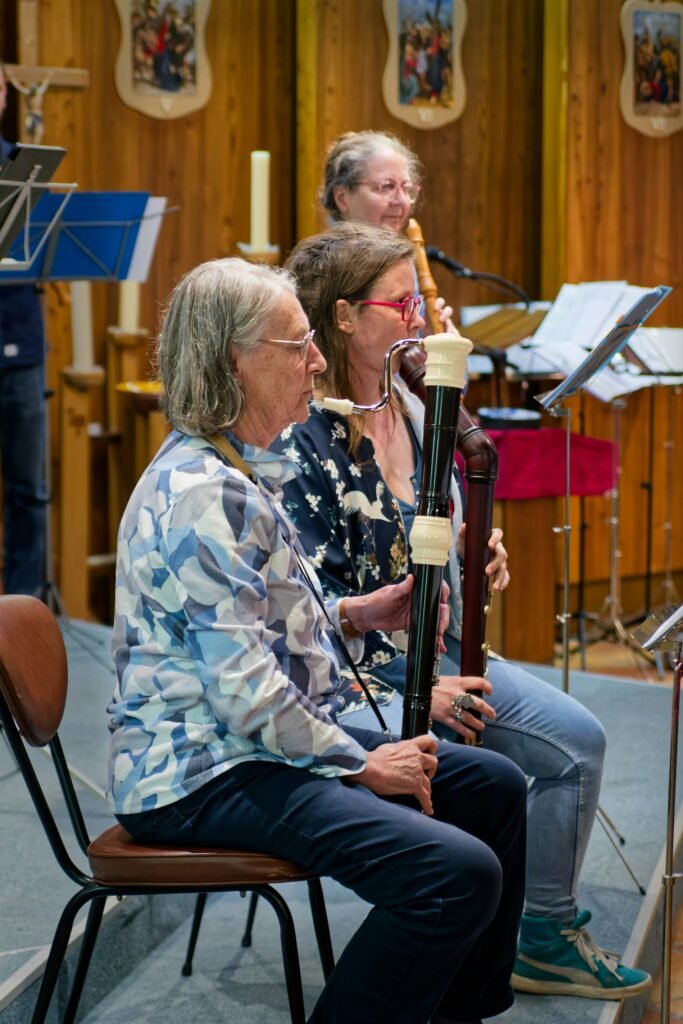
3. Join something with a job to do. Volunteering, a choir, a church committee, a community garden, coaching or mentoring. The European study pointed to group activity as the path. A shared task also takes the pressure off the small talk you didn’t want anyway.
4. Reach back before you reach out. The old friend you lost track of in your forties, the cousin you only see at funerals, the neighbor who moved two towns over. You already have history with them. That counts toward the hours.
5. Be the one who calls. Most people are waiting for someone else to go first. The friendships that last after retirement almost always belong to the person who keeps picking up the phone.
Who you keep
None of this is only about new people. Spouses, partners and companions carry more of the load after retirement, and that’s a lot to ask of one person. If you’re in a relationship, it helps to have friends who aren’t both of yours. If you’re single, there’s more on staying open to new people in Love Didn’t Retire.
The counterargument
Here’s the honest case on the other side, and I’ll leave it standing.
Some people are relieved. They spent forty years in rooms full of people they didn’t choose, and the quiet is the reward. Being alone is not the same as being lonely. If you have two or three people you’d call at 2 a.m., you see them, and the stillness feels like peace rather than absence, you may not need to change a thing.
The test is simple. Is it a quiet you chose, or a quiet that happened to you? Only you know which.
What to do this week
- Write down three work friends you miss. Invite one to something that isn’t about work.
- Pick one standing weekly appointment and go three weeks in a row before you judge it.
- Look up one group with a job to do near you: a volunteer shift, a choir, a garden, a committee.
- Call one person you’ve lost touch with. Not a text. A call.
- If the quiet feels heavy, tell your doctor at your next visit. That’s what they’re there for.
Work gave you friends by accident. Retirement asks you to make them on purpose. That’s harder. It’s also the first time in your life the choice has been entirely yours.
Go be bold!
Who’s the work friend you still talk to, and what made that one last? Reply and tell me. I’m collecting the answers, and I suspect there’s a pattern.
Sources
- Kauppi et al. — Social network ties before and after retirement: a cohort study (European Journal of Ageing, 2021) — the average loss of about one tie, concentrated in the outer circle
- Guthmuller et al. — The impact of retirement on loneliness in Europe (Scientific Reports, 2024) — no clear short-run effect, lower loneliness four to six years out, and the role of group activities
- University of Kansas — Study reveals number of hours it takes to make a friend — Jeffrey Hall’s 50, 90 and 200-plus hour estimates, and why work hours count less
- U.S. Surgeon General — Our Epidemic of Loneliness and Isolation (2023) — the mortality, smoking and dementia comparisons
- Michigan Medicine — 1 in 3 older adults still experience loneliness and isolation — National Poll on Healthy Aging figures for adults 50 to 80