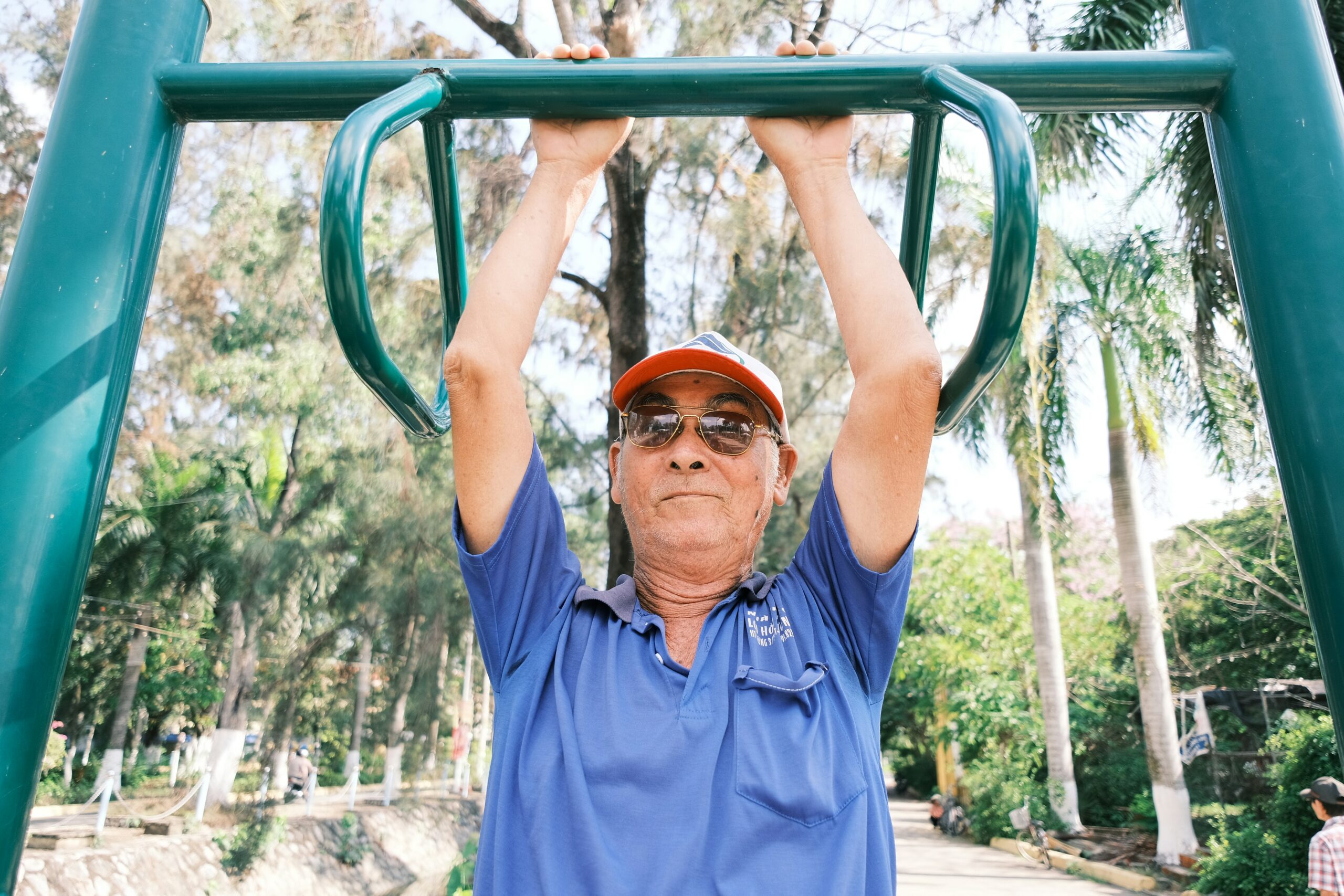
Nobody Told You That You Could Still Build
I’m not your doctor, and this isn’t medical advice. If you have a heart condition, joint replacement, uncontrolled blood pressure, or you’ve been off your feet for a while, talk to your physician before starting anything new. Then come back and read the rest, because the news is better than you’ve been told.
Walk into most gyms and watch how they treat a man or woman over sixty.
Soft voice. Slow nod. Somebody points at the recumbent bike by the window — the one with the magazine rack — and says “just take it easy.” They mean well. They are also, quietly, insulting you.
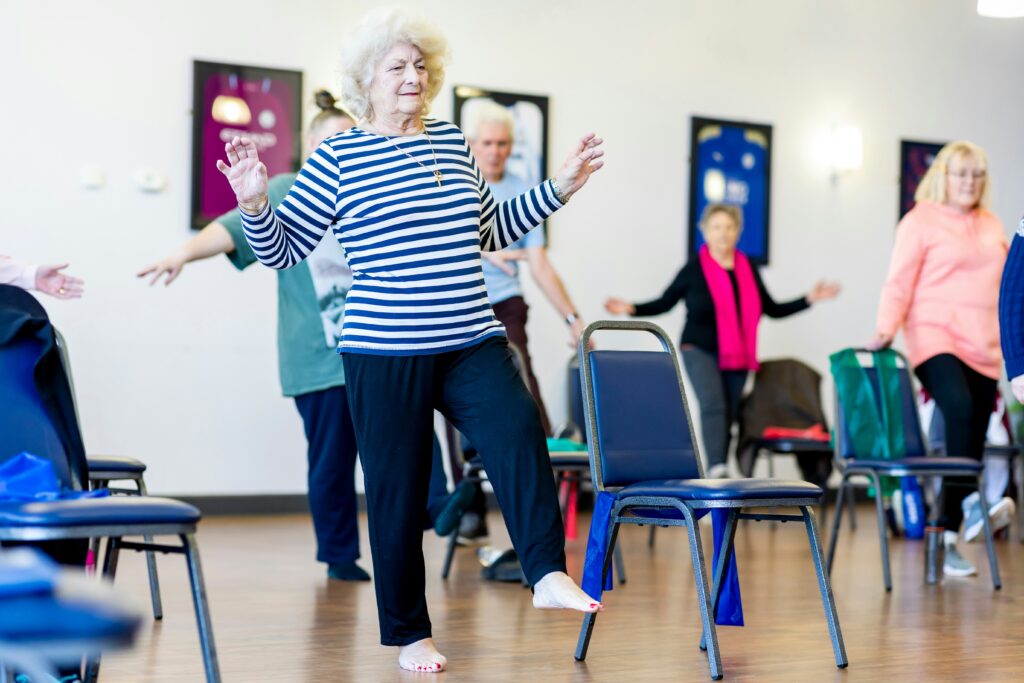
Because the whole vocabulary is wrong. Everything aimed at us after a certain birthday uses the language of maintenance. Preserve. Protect. Prevent. Manage. Slow the decline. Every verb in the brochure assumes you’re a building somebody’s trying to keep from falling down.
Here’s what the research has actually said for about thirty years now, and what almost nobody says out loud in the marketing: you can still build. Not “hold steady.” Not “slow the loss.” Build. Add. Get stronger at 68 than you were at 62. That is a documented, repeatable thing that happens to ordinary people in ordinary weeks, and the fact that it’s treated as a miracle story on the local news instead of the default expectation is one of the great quiet scandals of aging in this country.
The thing that’s actually happening
Let’s be honest about the problem first, because I’m not selling you sunshine.
Muscle does leave. It’s called sarcopenia, and Harvard Health puts the typical loss at roughly 3 to 5 percent of muscle mass per decade after age 30, with the pace picking up later in life. That’s not a rumor. That’s the tide.
But here’s the part that matters. A big share of that loss isn’t the calendar. It’s disuse. Muscle is not a savings account that drains on a schedule regardless of what you do — it’s a negotiation you have with your body every single week. The body is ruthlessly efficient. It maintains exactly what you convince it you need, and not one ounce more. Stop asking, and it stops paying.
The flip side of that ruthlessness is the good news: the body never stops listening. The mechanism that says “he needed to lift that, better build some capacity” doesn’t retire at 65. It gets slower and a little more stubborn. It does not switch off.
Muscle isn’t a savings account that drains on a schedule. It’s a negotiation you have with your body every week.
Why this is the highest-leverage thing you can do
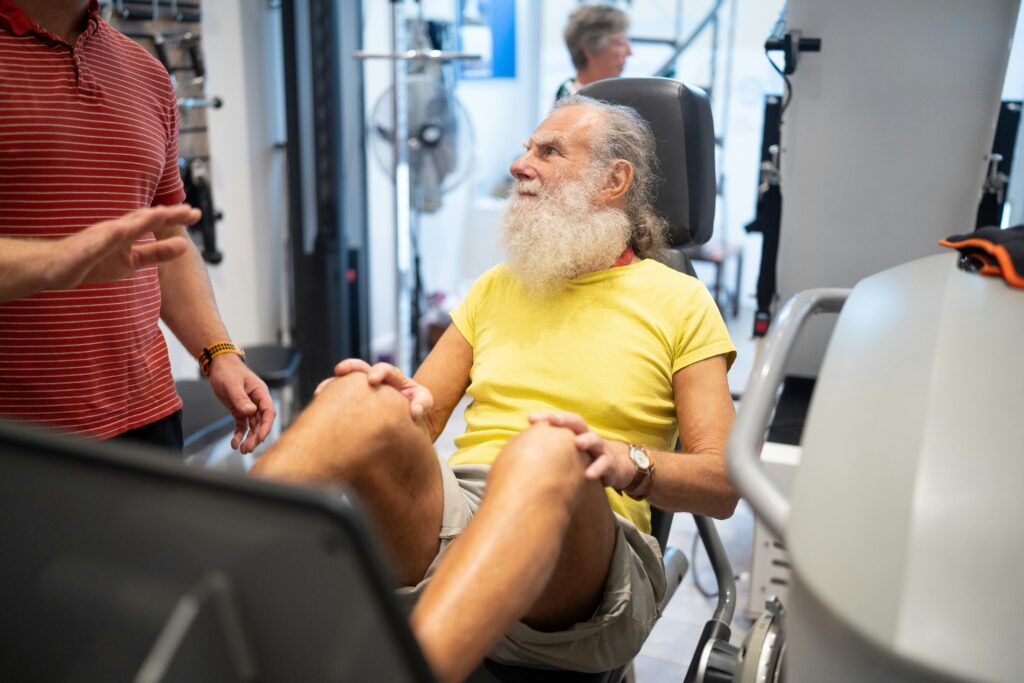
I’ll say this plainly. Of everything on the menu after 55 — supplements, diets, gadgets, brain games — resistance training has the most going for it and the least hype behind it, because nobody can patent a dumbbell.
Strength is upstream of almost everything you actually care about:
- Independence. The real question isn’t how much you can bench. It’s whether you can get off the toilet without a bar, out of a car without a hand, and up off the floor without help. Every one of those is a strength task in disguise.
- Falls. The fall is not usually the beginning of the story — the weak leg that couldn’t catch the stumble is. Strength and balance work together on this, which is why the guidance pairs them.
- Bones. Loaded muscle pulls on bone, and bone responds to being pulled on. There is no pill that does this the way that does.
- Metabolism and blood sugar. Muscle is where a huge share of your glucose goes. More muscle, more parking spaces.
- The head. This is the one people don’t expect. Doing something measurably hard, and watching the number go up week over week, does something for morale at 70 that no affirmation on a coffee mug will touch.
What the guidelines actually ask for
Here’s the bar, and it’s lower than most people think. The CDC’s guidance for older adults is:
- 150 minutes a week of moderate aerobic activity — that’s 30 minutes, five days, and a brisk walk counts;
- muscle-strengthening activities on 2 or more days a week, working all the major muscle groups;
- plus balance work, which is specifically added for older adults.
Two days. Two. Not two hours a day, not five days in a gym — two sessions a week that make your muscles work against real resistance.
Read that number again, then go look at how the fitness industry has managed to make it sound impossible.
What “real resistance” means for you

Resistance means something is genuinely pushing back. It does not have to be a barbell.
- Your own body: sit-to-stands out of a dining chair, wall pushups, step-ups on a bottom stair, heel raises at the kitchen counter.
- Bands: cheap, forgiving on the joints, easy to travel with, and the good ones will humble you.
- Dumbbells or machines: the classic route, and machines are a perfectly respectable place to start because they hold the path steady for you.
- Life: carrying groceries the long way, hauling firewood, digging, moving mulch. It counts. It always counted.
The test for whether it’s working is simple and it’s not about soreness. It’s this: by the last two or three repetitions, you should be genuinely working, and your form should still be good. If you could have done twelve more, it’s a warmup, not a set. If your form broke on rep four, it’s too heavy. Somewhere in between is the whole sport.
And then the only rule that really matters: next month it should be a little harder than this month. More weight, more reps, more sets, less rest — pick any one. That’s progressive overload, and it is the entire secret. Everything else is decoration.
The eight-week contract
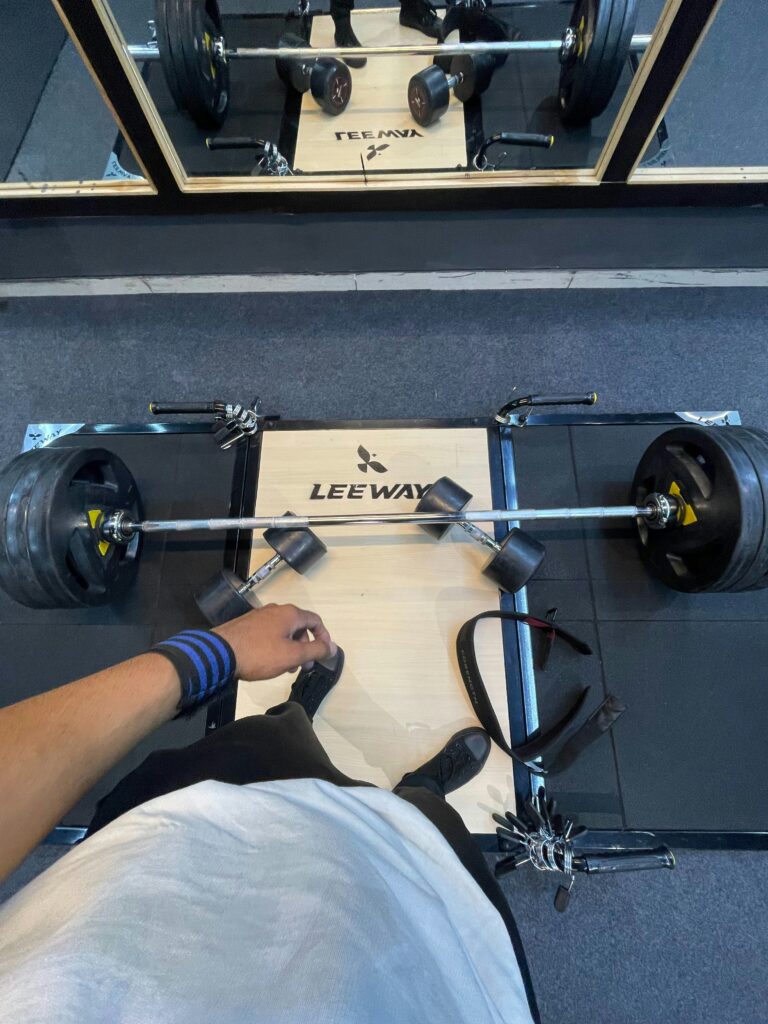
If you want a place to start, start here. Two days a week. Six movements. Nothing fancy:
- Sit-to-stand (chair squat) — the single most important one on this list
- A push — wall pushups, or countertop pushups, or a chest press
- A pull — a band row, or a dumbbell row braced on a chair
- A hinge — hip hinge with a light weight, or a glute bridge on the floor
- A carry — walk a loaded bag across the room and back, standing tall
- Balance — stand on one foot near the counter, thirty seconds a side
Two or three sets of each. Write down what you did. That written record is not optional — it’s the whole feedback loop, and without it you’re guessing.
Give it eight weeks before you judge it. Not two. The first three weeks are mostly your nervous system learning the movements, and it’s around week four to six that the mirror and the stairs start reporting back.
One last thing

I carried people for a living once. I know exactly what a body is worth when it’s the thing standing between somebody and the ground.
Now, decades on, I think about that differently. The body you’ve got is not a memento of who you used to be. It’s equipment. It’s still in service. And equipment that gets used and maintained outlasts equipment that gets parked, every single time.
Nobody is coming to tell you that you’re allowed to get stronger. So I’ll do it.
You’re allowed. Start today.
Go be bold!
Pick your two days this week and put them in the calendar before you close this tab. Then reply and tell me which two — I’ll check on you in a month.
Sources
- CDC, What Counts as Physical Activity for Older Adults
- CDC, Adult Activity: An Overview — 150 minutes weekly, muscle-strengthening on 2 or more days, plus balance work for older adults
- Harvard Health, Preserve your muscle mass — 3 to 5 percent loss per decade after age 30